
Life-Cycle Costs vs. Initial Construction Costs: What Every Building Owner Should Know
When planning a new building or renovation, one question almost always comes first:
"How much will it cost?"
It's an important question—but it's often focused only on the cost to design and construct the project. While initial construction costs matter, they represent only a small portion of what a building will cost over its lifetime.
The smartest owners don't simply ask, "What costs less today?" They ask, "What provides the greatest value over the next 20, 30, or even 50 years?"
Understanding the difference between initial construction costs and life-cycle costs can help you make better investment decisions, reduce operating expenses, and maximize the long-term value of your property.
Initial Construction Costs: The Price You Pay Today
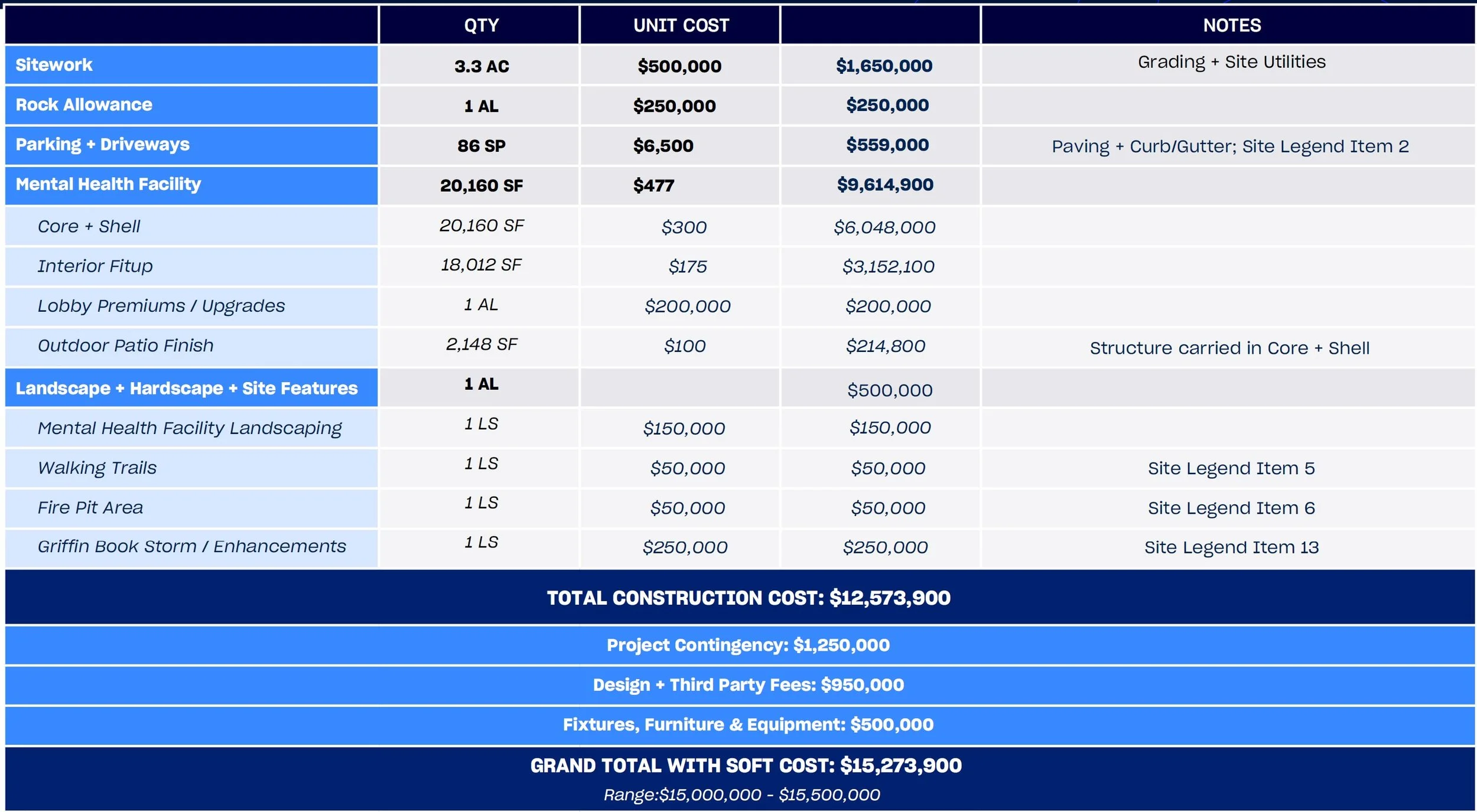
Initial construction costs include the expenses required to design and build the project, such as:
Architectural and engineering services
Site preparation
Building materials
Labor
Permits and inspections
Equipment and fixtures
Interior finishes
These are the costs typically reflected in the construction budget and are often the primary focus during bidding.
Because they are immediate and highly visible, owners sometimes feel pressure to reduce these costs wherever possible.
While staying within budget is important, selecting the lowest-cost option isn't always the most economical decision.
Areas Where Investing More Often Saves More
-
Higher-performance insulation, windows, roofing systems, and air barriers reduce heating and cooling loads every day the building operates.
Small improvements in energy efficiency accumulate into significant savings over decades.
-
Efficient HVAC equipment may require a larger initial investment but often delivers:
Lower utility bills
Longer equipment life
Better occupant comfort
Reduced maintenance
For facilities that operate long hours, these savings can be substantial.
-
Choosing higher-quality finishes often reduces:
Repairs
Replacement frequency
Maintenance labor
Operational interruptions
Flooring, exterior cladding, doors, hardware, and roofing are common areas where durability pays dividends.
-
A building that can adapt to future needs often avoids expensive renovations later.
Features such as:
Modular spaces
Accessible utilities
Flexible structural layouts
Expandable infrastructure
allow buildings to evolve with changing business needs rather than becoming obsolete.
Hidden Costs Owners Often Overlook
Some of the most expensive building costs don't appear in the construction estimate.
These include:
Employee productivity losses from poor indoor environments
Business interruptions during repairs
Higher insurance costs
Increased maintenance staffing
Equipment downtime
Deferred maintenance that accelerates deterioration
Thoughtful design can reduce many of these hidden expenses before construction even begins.
Value Engineering Should Focus on Value
"Value engineering" is sometimes misunderstood as simply reducing costs.
Effective value engineering evaluates how each decision affects both the initial budget and long-term ownership costs.
Sometimes eliminating an expensive feature makes perfect sense.
Other times, removing a higher-quality material or efficient system creates much larger expenses later.
Good value engineering asks:
How can we maximize long-term value—not simply minimize today's cost?
Making Smarter Investment Decisions
Every project has budget constraints.
The objective isn't to specify the most expensive products available—it's to invest strategically where long-term returns justify the additional cost.
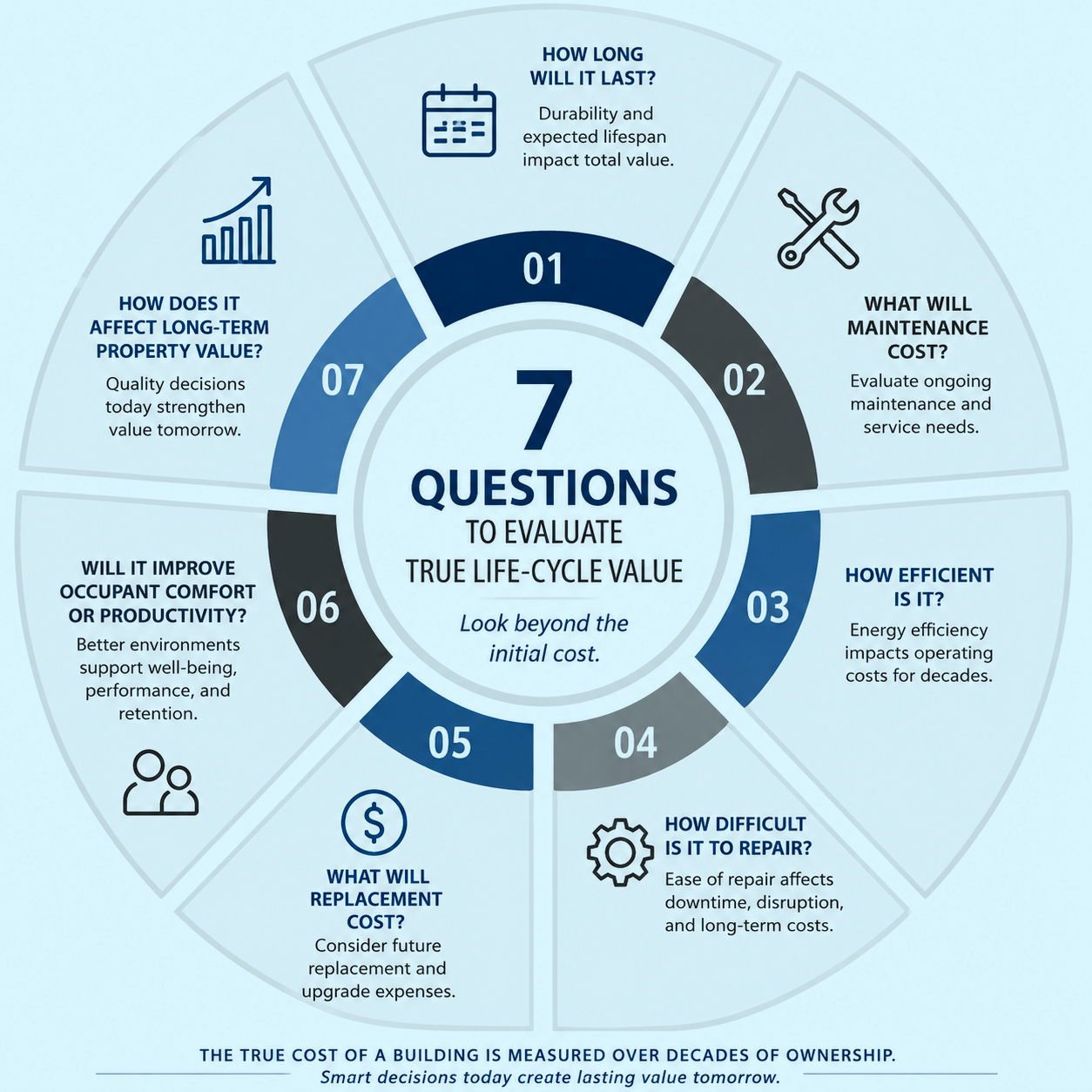
When evaluating alternatives, owners should ask:
What will this cost to maintain?
How long will it last?
How energy efficient is it?
How difficult is it to repair?
What will replacement cost?
Will this improve occupant comfort or productivity?
How does it affect the building's resale value?
These questions often reveal opportunities where a modest increase in initial investment produces substantial savings over the building's life.
The Bottom Line
The true cost of a building isn't measured on the day construction is complete.
It's measured over decades of ownership.
A thoughtful investment in durable materials, efficient systems, and flexible design can significantly reduce operating expenses, extend the building’s lifespan, and improve long-term value.
At B Group Architecture, we believe successful projects balance budget, performance, and longevity. Our goal is to help clients make informed decisions that support both today's financial objectives and tomorrow's operational needs—creating buildings that continue to deliver value long after the ribbon-cutting